
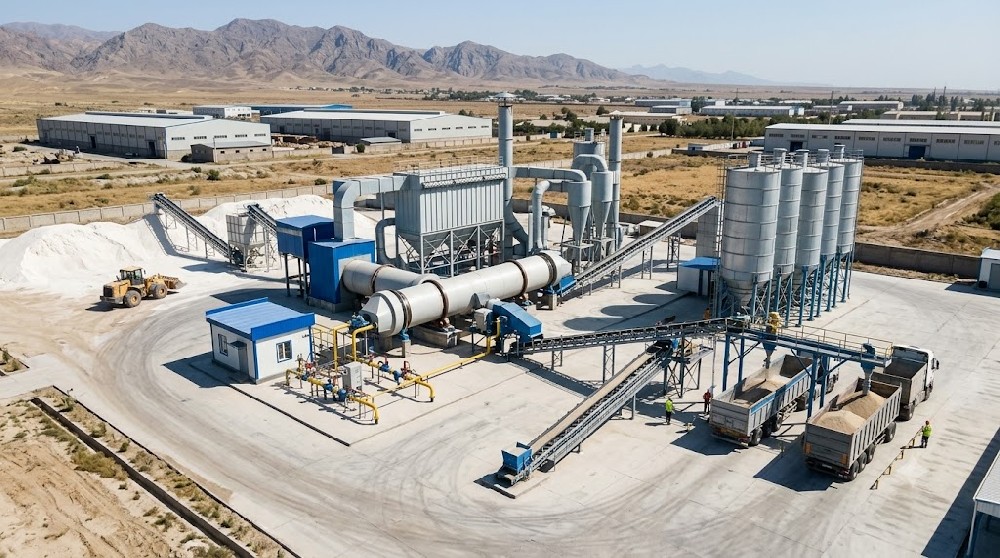
10 TPH Quartz Sand Drying Plant for Construction Materials Company in Uzbekistan
10 TPH Quartz Sand Drying Plant for Construction Materials Company in UzbekistanTighter Moisture Control for Higher-Performance Construction Chemicals1. Project BackgroundA construction materials supplier in the Tashkent region of Uzbekistan had been compounding tile adhesives and wall putty for sev
Solution Overview
10 TPH Quartz Sand Drying Plant for Construction Materials Company in Uzbekistan
Tighter Moisture Control for Higher-Performance Construction Chemicals
1. Project Background
A construction materials supplier in the Tashkent region of Uzbekistan had been compounding tile adhesives and wall putty for several years. Their business was growing — contractors across the region valued the convenience of ready-mixed products over on-site blending. But as production volumes increased, a quality issue became harder to ignore.
The quartz sand they sourced from local quarries arrived with moisture content that varied from batch to batch, typically ranging between 6% and 8%. While this might sound modest, it was enough to cause real problems:
Moisture in the sand triggered partial hydration of cement during storage, reducing the active binder content before the product even reached the customer.
Tile adhesive batches showed inconsistent open time and bond strength, particularly those destined for exterior applications where performance requirements were stricter.
The production team spent increasing hours adjusting formulations to compensate for varying sand moisture, adding time and complexity to what should have been a repeatable process.
The company had tried working with different quarry suppliers and even experimented with covered stockpile areas, but neither approach solved the core problem. The quartz sand needed to be dried — properly, consistently, and to a tighter specification than their existing air-drying methods could achieve.
2. Why Quartz Sand Demands Lower Final Moisture
The decision to target ≤ 0.3% final moisture — rather than the 0.5% common in many dry mortar applications — was deliberate and tied to product performance.
Quartz sand is the primary aggregate in tile adhesive formulations. When residual moisture exceeds 0.3%, two things happen:
Cement pre-hydration accelerates. Even in sealed bags, moisture from the sand can activate cement particles over weeks of storage. The result is lump formation and reduced bond strength when the adhesive is finally mixed and applied.
Additive performance degrades. Cellulose ethers, redispersible polymer powders, and other high-value additives are sensitive to moisture. Their effectiveness — and therefore the adhesive's open time, slip resistance, and flexibility — depends on a chemically stable, dry environment inside the bag.
The customer's technical team had documented these effects through their own quality testing. They knew the 0.3% threshold wasn't just a number on a spec sheet; it was the line between consistent product performance and the kind of variability that loses customers.
3. Equipment Selection: Three-Pass Rotary Dryer with Natural Gas Firing
The customer evaluated two main options: a single-pass rotary dryer and a three-pass design.
The single-pass unit had a lower purchase price, but two factors worked against it:
Footprint. The available installation area was approximately 600 m², wedged between an existing warehouse and the mortar mixing building. A single-pass drum long enough to achieve the required final moisture would have been a tight fit.
Fuel economy. Early calculations showed the single-pass design consuming roughly 20–25% more fuel per ton of dried sand compared to a three-pass unit. With natural gas prices in Uzbekistan having risen steadily, this operating cost difference would compound year after year.
The three-pass rotary dryer was selected for this installation. Its concentric drum design — three cylinders nested inside one another — provided a longer material residence time within a shorter overall machine length. The sand traveled through the inner cylinder, reversed direction through the middle, and completed its path through the outer cylinder before discharge.
A natural gas burner was specified as the heat source. Natural gas infrastructure was already available at the site, and gas-fired heating offered cleaner combustion, more precise temperature control, and lower maintenance than coal or biomass alternatives. For a product as sensitive to contamination as quartz sand destined for tile adhesives, the clean burn was a meaningful advantage.
4. Material Parameters
| Parameter | Specification |
|---|---|
| Material | Quartz sand |
| Feed Size | 0–3 mm |
| Initial Moisture | 6–8% |
| Final Moisture | ≤ 0.3% |
| Rated Throughput | 10 tons per hour |
The narrower particle size range (0–3 mm versus the 0–5 mm common in general mortar sand) meant the material had a higher specific surface area and could dry slightly faster. However, it also meant fines generation during drying was a concern. The dust collection system needed to be properly sized to handle this.
5. Equipment Configuration
| Equipment | Qty | Function |
|---|---|---|
| Vibrating Feeder | 1 | Regulated feed of raw quartz sand into the line |
| Belt Conveyor | 2 | Material transfer between process stages |
| Three-Pass Rotary Dryer | 1 | Core drying unit with concentric cylinder design |
| Natural Gas Burner | 1 | Clean-burning heat source with adjustable output |
| Cyclone Separator | 1 | Primary dust capture, recovers entrained fine sand |
| Pulse Dust Collection System | 1 | Secondary filtration, ensures compliance with emission limits |
| Finished Product Silo | 1 | Sealed storage for dried sand prior to batching |
The vibrating feeder was chosen over a belt feeder because quartz sand — particularly the finer fractions — can bridge and clog in a hopper. Vibration ensured steady, controlled flow into the dryer feed conveyor.
The two-stage dust collection system (cyclone + pulse-jet baghouse) served a dual purpose. Beyond emissions control, the cyclone recovered fine quartz particles that would otherwise be lost to the exhaust stream. These fines could be reintroduced into the product or, depending on the formulation, sold separately as a finer-grade silica material.
6. Production Capacity
| Parameter | Value |
|---|---|
| Rated Capacity | 10 TPH |
| Working Time | 8–10 hours/day |
| Daily Production | 80–100 tons |
| Annual Production | ~30,000 tons |
At 80–100 tons per day, the drying line could comfortably supply the customer's tile adhesive and wall putty production with dried quartz sand, with enough surplus capacity to cover peak-season demand or future growth. The 30,000-ton annual estimate assumed approximately 300 operating days per year.
7. Production Process
Raw Quartz Sand (6–8% moisture)
            ↓
      Vibrating Feeder
            ↓
      Belt Conveyor
            ↓
   Three-Pass Rotary Dryer ← Natural Gas Burner (heat source)
            ↓
      Cyclone Separator → Recovered fines
            ↓
   Pulse Dust Collection System → Clean exhaust
            ↓
      Finished Product Silo
            ↓
   To Tile Adhesive & Wall Putty Batching
The process was designed for simplicity. Raw quartz sand was delivered to the feeder by loader. The vibrating feeder maintained a steady flow onto the belt conveyor, which carried material into the dryer inlet. Inside the three-pass drum, counter-current hot gas flow in the inner cylinder maximized initial heat transfer where moisture content was highest. As the sand moved through the middle and outer cylinders, progressively gentler heating brought moisture down to the target without overheating the material — important for quartz sand, where excessive temperature can cause thermal fracturing and generate unwanted ultra-fines.
Exiting the dryer, the sand passed through the cyclone separator, where heavier particles — including usable fine sand entrained in the air stream — were captured and directed to the finished product silo. The remaining dust-laden air moved through the pulse-jet baghouse for final cleaning before stack discharge. The entire dust collection train was designed to operate under negative pressure, keeping the drying area visibly clean during normal operation.
8. Operational Results
The drying line was commissioned in early 2024. Within the first three months of steady operation, several measurable improvements emerged:
| Metric | Before Drying Line | After Drying Line |
|---|---|---|
| Sand Moisture Variation | 4–8% (batch dependent) | ≤ 0.3% (consistent) |
| Tile Adhesive Bond Strength (28-day) | Variable, occasional below-spec results | Consistent, within specification |
| Product Returns / Complaints | 1–2 per month | Rare |
| Fuel Consumption (per ton dried) | N/A (purchased pre-dried sand) | 15–20% lower than single-pass benchmark |
| Formulation Adjustments | Frequent (per batch) | Minimal |
The most significant outcome was in product performance. The customer's tile adhesive had previously shown occasional bond strength results that fell below the declared specification, particularly in batches produced during humid weather. The quality team traced this to inconsistent sand moisture. Once the drying line was in steady operation, bond strength test results stabilized, and the incidence of borderline or failing results dropped to near zero.
9. Advantages Achieved
The project delivered five specific benefits:
Stable raw material quality. Moisture content was no longer a variable the production team had to manage. Every batch of quartz sand entering the batching system was within specification.
Reduced product defects. Tile adhesive performance became predictable, and the quality team spent less time investigating complaints and more time on process improvement.
Improved tile adhesive strength consistency. This was the metric that mattered most to the customer's contractor clients. Consistent bond strength meant fewer callbacks and stronger word-of-mouth referrals.
Lower energy consumption. The three-pass design's thermal efficiency translated to measurable fuel savings compared to the single-pass alternative. The plant manager tracked gas consumption carefully during the first six months and confirmed the operating cost advantage.
Compact installation. The entire system fit within 600 m², leaving space for a future second production line if needed.
10. Customer Feedback
Six months after commissioning, the plant manager shared his assessment:
"The three-pass dryer significantly improved the quality of our dry mortar products while reducing fuel costs. We used to adjust formulations batch by batch depending on how wet the sand was. Now the process is consistent, and our tile adhesive test results are stable. The natural gas burner is clean and easy to operate — maintenance has been minimal."
He also noted that the dryer's compact footprint was an unexpected advantage. The space originally allocated for sand drying was tight, and the three-pass design meant they didn't need to reorganize the entire site layout to accommodate the equipment.
11. Key Takeaway
This case highlights an important distinction: not all sand drying requirements are the same. For general masonry mortar, 0.5% final moisture may be sufficient. But for quartz sand used in high-performance tile adhesives — where polymer additives and precise cement chemistry are involved — the tighter 0.3% threshold makes a measurable difference in product quality and customer satisfaction.
The three-pass rotary dryer, combined with natural gas firing and two-stage dust collection, provided a complete solution sized to the customer's actual throughput needs. The investment was justified by reduced product defects, lower fuel costs, and a manufacturing process that finally operated the same way in every season.
Related Equipment
10 TPH Quartz Sand Drying Plant for Construction Materials Company in Uzbekistan
View Details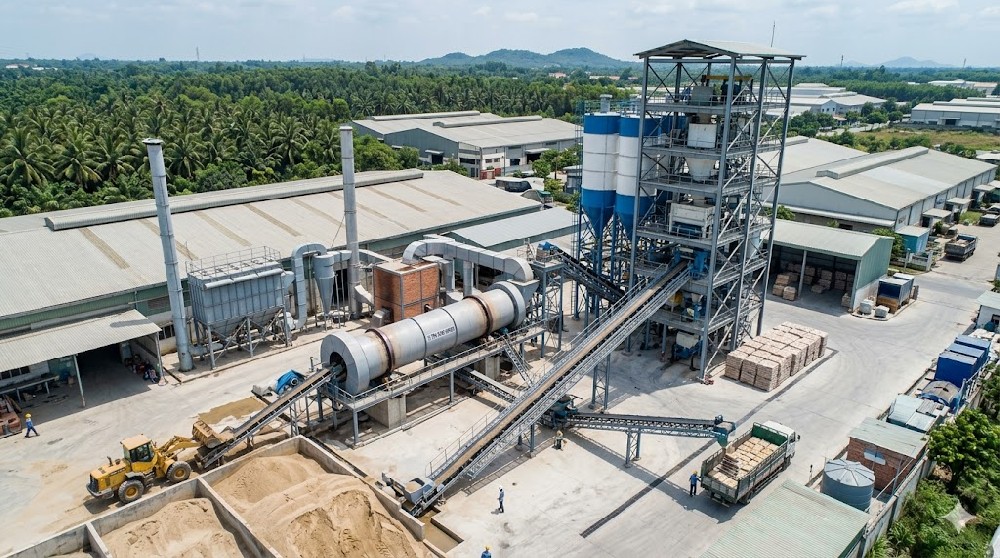
15 TPH River Sand Drying Line for Dry Mix Mortar Production in Vietnam
View Details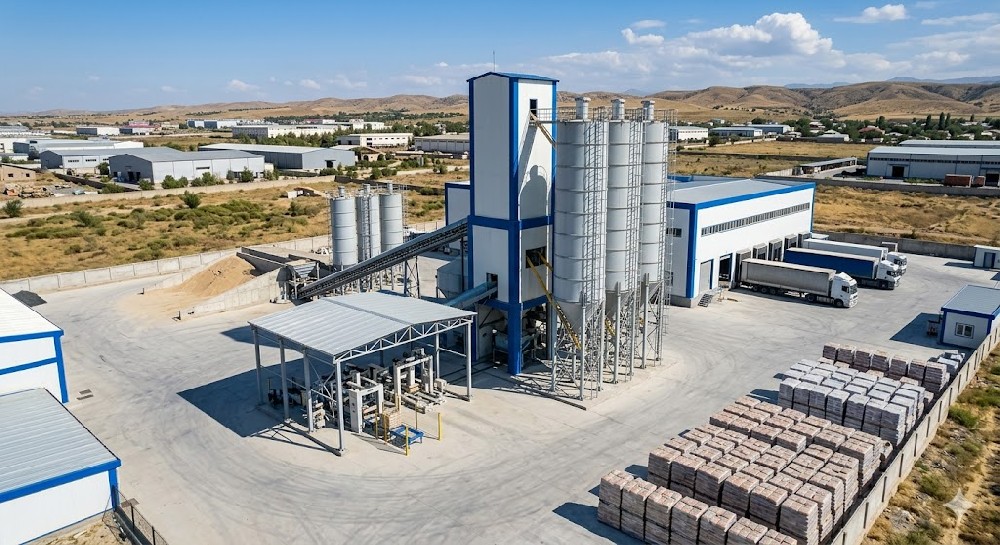
15 TPH Dry Mortar Production Plant for Building Materials Manufacturer in Uzbekistan
View Details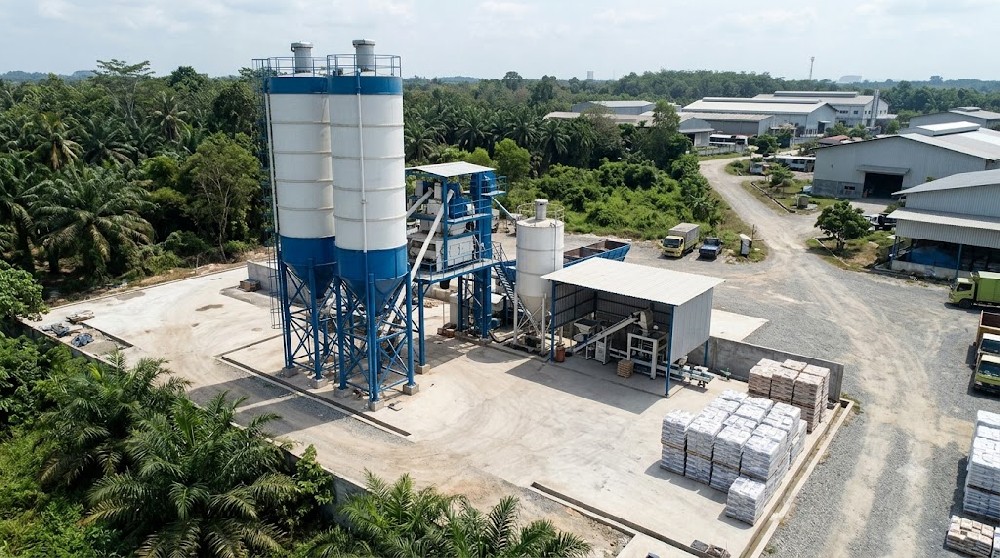
8 TPH Tile Adhesive & Wall Putty Production Line in Indonesia
View DetailsMake an Inquiry
Get a Quotation
Please fill in the form below (* are required) to send us a brief message, we will reply to you within 12 hours/provide you with the latest quotes.
SERVICE PROMISE
Senior technical engineers provide you with customized solutions and professional installation services to effectively solve your problem in after-sales.