
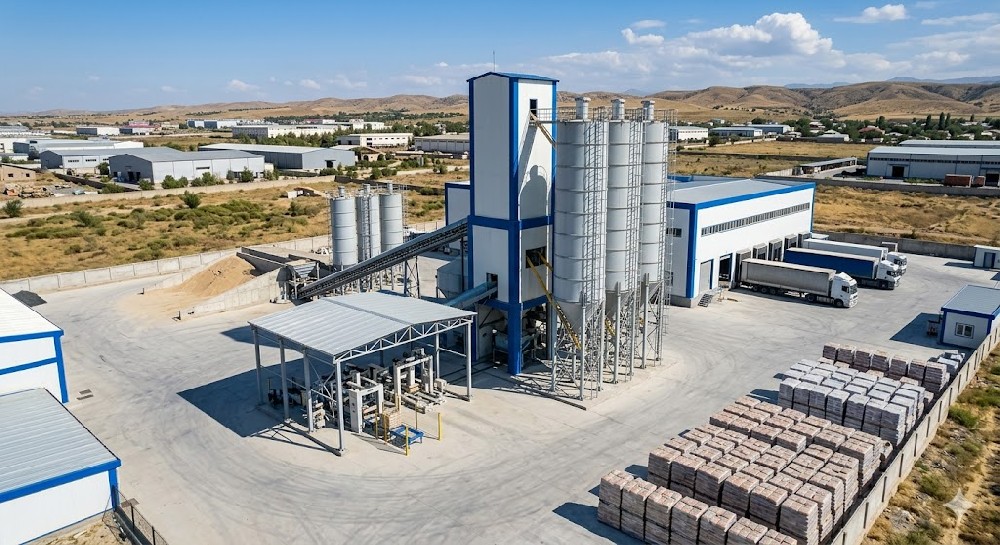
15 TPH Dry Mortar Production Plant for Building Materials Manufacturer in Uzbekistan
15 TPH Dry Mortar Production Plant for Building Materials Manufacturer in UzbekistanScaling Up with Automation: From Regional Supplier to Multi-Product Manufacturer1. Project BackgroundA building materials manufacturer in Uzbekistan had spent over a decade supplying concrete blocks, bricks, and basi
Solution Overview
15 TPH Dry Mortar Production Plant for Building Materials Manufacturer in Uzbekistan
Scaling Up with Automation: From Regional Supplier to Multi-Product Manufacturer
1. Project Background
A building materials manufacturer in Uzbekistan had spent over a decade supplying concrete blocks, bricks, and basic construction aggregates to local housing and infrastructure projects. The business was stable, but the management team recognized a shift in the market: contractors were increasingly asking for ready-to-use dry mortar products rather than mixing on-site.
Rather than cede this demand to importers or larger competitors in Tashkent, the company decided to add dry mortar production to their existing manufacturing site. The goal was clear — leverage their established customer relationships and raw material access to capture a growing segment of the market.
2. Project Objectives
The management team set four specific targets for the new production line:
Annual output above 30,000 tons — enough to serve their existing contractor network plus neighboring regions.
Consistent product quality — a non-negotiable requirement, as their reputation was built on reliable building materials.
Reduced manpower costs — automation was prioritized to keep the production team lean.
Future product expansion — the line needed to handle multiple formulations without major reconfiguration.
3. The 15 TPH Decision: Capacity That Matches Ambition
The company considered both smaller (8–10 TPH) and larger (20+ TPH) configurations before settling on 15 TPH.
The reasoning was practical:
Projected demand from existing customers alone justified roughly 25,000 tons annually. Adding new accounts in adjacent regions pushed the target closer to 35,000–40,000 tons.
An 8 TPH line would require double-shift operation to meet this volume. A 20 TPH line would run at barely 60% utilization.
The 15 TPH rating allowed 100–120 tons per day on a single shift, matching the company's growth plan without overpaying for idle capacity.
This was not a speculative build. The capacity was tied directly to the management team's three-year sales forecast, which was grounded in existing customer commitments and signed letters of intent from two regional distributors.
4. Product Portfolio: Five Formulations, One Line
The line was designed to produce five distinct products, each with different raw material combinations and performance characteristics:
| Product | Primary Application |
|---|---|
| Tile Adhesive | Interior and exterior ceramic tile fixing |
| Self-Leveling Mortar | Floor leveling prior to final finishes |
| Waterproof Mortar | Basement, bathroom, and wet area waterproofing |
| Masonry Mortar | Brick and block laying for walls |
| Thermal Insulation Mortar | External wall insulation systems |
The product range reflected deliberate market positioning. Rather than competing in low-margin basic mortar, the company aimed to capture value-added specialty products where imported alternatives were expensive and local supply was scarce.
5. Equipment Configuration
The production line was built around a gravity-free (twin-shaft) mixer, selected for its ability to handle the demanding mixing requirements of self-leveling and waterproof mortars, which require high homogeneity and consistent additive dispersion.
| Equipment | Qty | Notes |
|---|---|---|
| Sand Dryer | 1 | Rotary drum, matched to 15 TPH throughput |
| Bucket Elevator | 2 | Enclosed type, for clean material transfer |
| Cement Silo (100T) | 3 | Separate storage for different cement grades |
| Additive Silo | 5 | Dedicated silo per additive type, preventing cross-contamination |
| Gravity-Free Mixer | 1 | Twin-shaft, high homogeneity mixing |
| Automatic Packing Machine | 2 | Dual lines for simultaneous 25 kg bagging |
| Palletizing System | 1 | Automated stacking, reducing end-of-line labor |
| PLC Control Center | 1 | Centralized recipe management and production monitoring |
The five additive silos were a deliberate choice. With formulations spanning from simple masonry mortar to complex self-leveling compounds, dedicated storage for each additive eliminated the risk of cross-contamination and reduced cleaning time between product changeovers.
The dual packing machines addressed a practical bottleneck. On high-volume days, a single packer would have limited overall line speed. Two units running in parallel ensured that mixing capacity wasn't wasted waiting on bagging.
6. Production Capacity
| Parameter | Value |
|---|---|
| Rated Capacity | 15 TPH |
| Daily Output | 100–120 tons |
| Annual Output | 35,000–40,000 tons |
| Shift Pattern | Single 8-hour shift (with option for double shift) |
At 35,000–40,000 tons per year, this plant sits squarely in the medium-capacity range — sufficient for regional market coverage without the complexity and capital demands of a large-scale industrial facility.
7. Production Flow
Raw Sand Reception → Drying → Elevator → Screening → Storage Silos
                                                        ↓
                                          Automatic Batching ← Cement, Additives (5 types)
                                                        ↓
                                                Gravity-Free Mixing
                                                        ↓
                                                Finished Product Buffer
                                                        ↓
                                          Dual Automatic Packing (25 kg bags)
                                                        ↓
                                                 Palletizing
                                                        ↓
                                                 Warehouse
The PLC control center served as the operational hub. Operators could call up any of the five product recipes with a single command, and the system automatically managed batching sequences, mixing time, and discharge. Real-time production data — batch counts, material consumption, and equipment status — was displayed on a central monitor.
8. Customer Feedback
During a post-commissioning review, the plant manager shared several observations:
"The automatic control system simplified daily operations significantly. We went from worrying about manual weighing errors to trusting the PLC to handle batch accuracy. Product quality became more stable — our tile adhesive consistency improved noticeably — and we can now monitor production data in real time. If there's a deviation in mixing time or material usage, we see it immediately, not hours later."
The real-time monitoring capability proved especially valuable for the self-leveling mortar line, where slight variations in additive dosage can affect flow properties. The system logged every batch, creating a traceable record that the company used to fine-tune formulations over the first three months of operation.
9. Economic Benefits: Before vs. After
Before the plant was commissioned, the company had experimented with outsourced production — contracting a facility in a neighboring city to produce their formulations. The comparison told a clear story:
| Metric | Outsourced Production | Own Production |
|---|---|---|
| Transportation Cost (per ton) | High (200+ km round trip) | Minimal (on-site) |
| Delivery Lead Time | 5–7 days | 1–2 days |
| Formula Control | Limited (shared facility) | Full control |
| Gross Margin | Squeezed by tolling fees | Significantly improved |
| Quality Consistency | Variable | Stable and documented |
Three specific benefits stood out:
Reduced transportation costs — eliminating the 200-kilometer round trip for outsourced production saved roughly 12–15% in logistics expenses per ton.
Improved delivery speed — contractors who previously waited a week for specialty mortars could now receive orders within 48 hours, a competitive advantage in time-sensitive construction schedules.
Better control over product formulas — the company could now adjust formulations based on local raw material availability and customer feedback, rather than being locked into a third party's production parameters.
10. Key Takeaway
This project represents a measured upgrade: an established manufacturer adding a medium-capacity line sized to real demand, with automation that reduced labor dependency and five dedicated additive systems that enabled a diverse product range.
The 15 TPH configuration hit the right balance — large enough to cover regional demand with room for growth, small enough to keep capital costs manageable and utilization high. It's a model that fits the needs of many mid-sized building materials companies looking to move from distribution or basic manufacturing into value-added dry mortar production.
Related Equipment
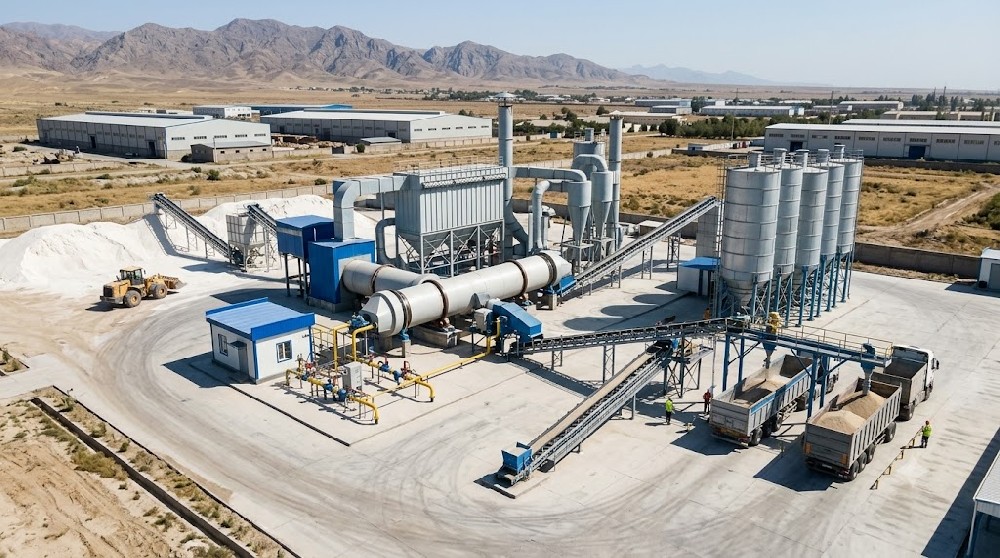
10 TPH Quartz Sand Drying Plant for Construction Materials Company in Uzbekistan
View Details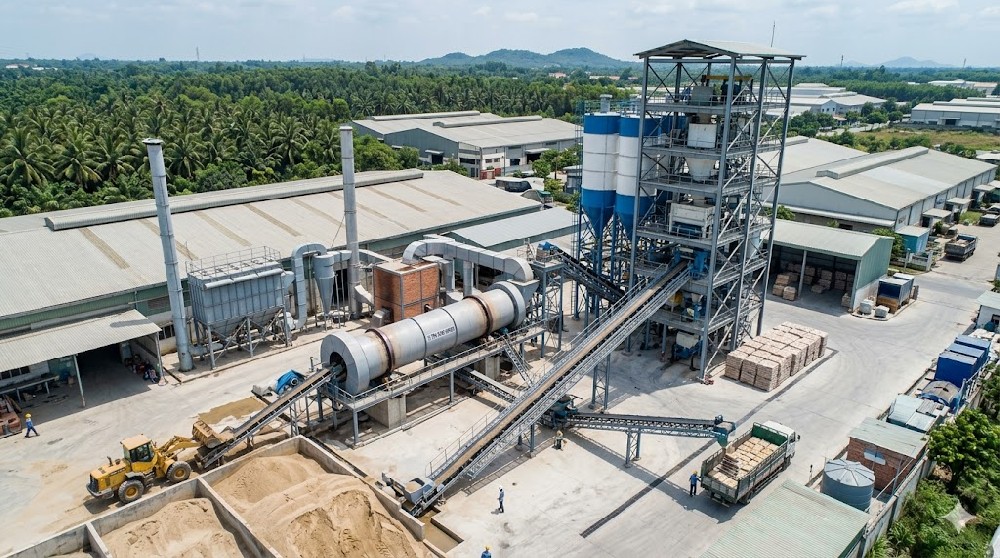
15 TPH River Sand Drying Line for Dry Mix Mortar Production in Vietnam
View Details
15 TPH Dry Mortar Production Plant for Building Materials Manufacturer in Uzbekistan
View Details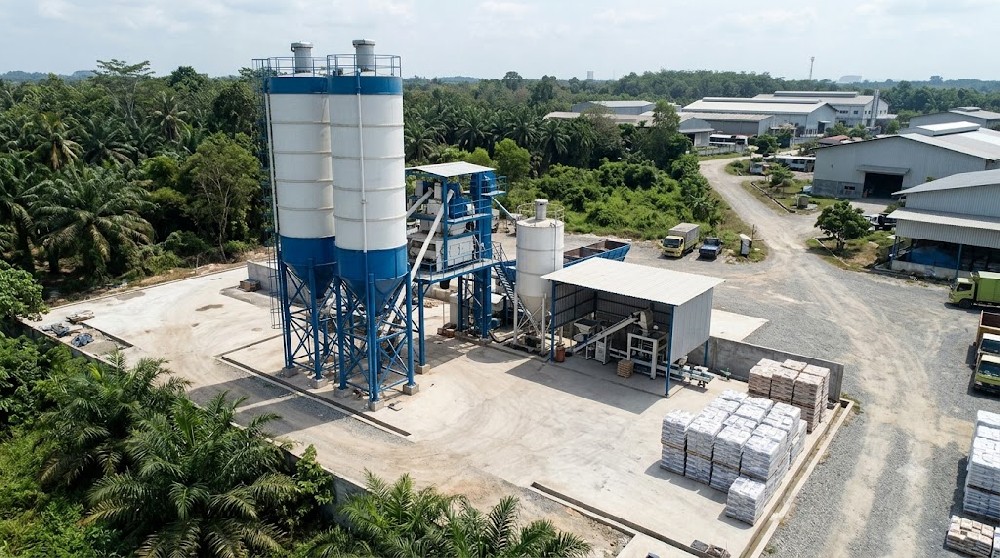
8 TPH Tile Adhesive & Wall Putty Production Line in Indonesia
View DetailsMake an Inquiry
Get a Quotation
Please fill in the form below (* are required) to send us a brief message, we will reply to you within 12 hours/provide you with the latest quotes.
SERVICE PROMISE
Senior technical engineers provide you with customized solutions and professional installation services to effectively solve your problem in after-sales.