
Vertical Roller Mill (VRM) for Cement, Slag & Coal Grinding
Vertical roller mill (VRM) for cement raw meal, clinker, slag (GGBS) and coal grinding, 15-260 t/h. Integrated drying, grinding & classifying, 30-40% lower power than ball mills. Get a quote!
Product Details
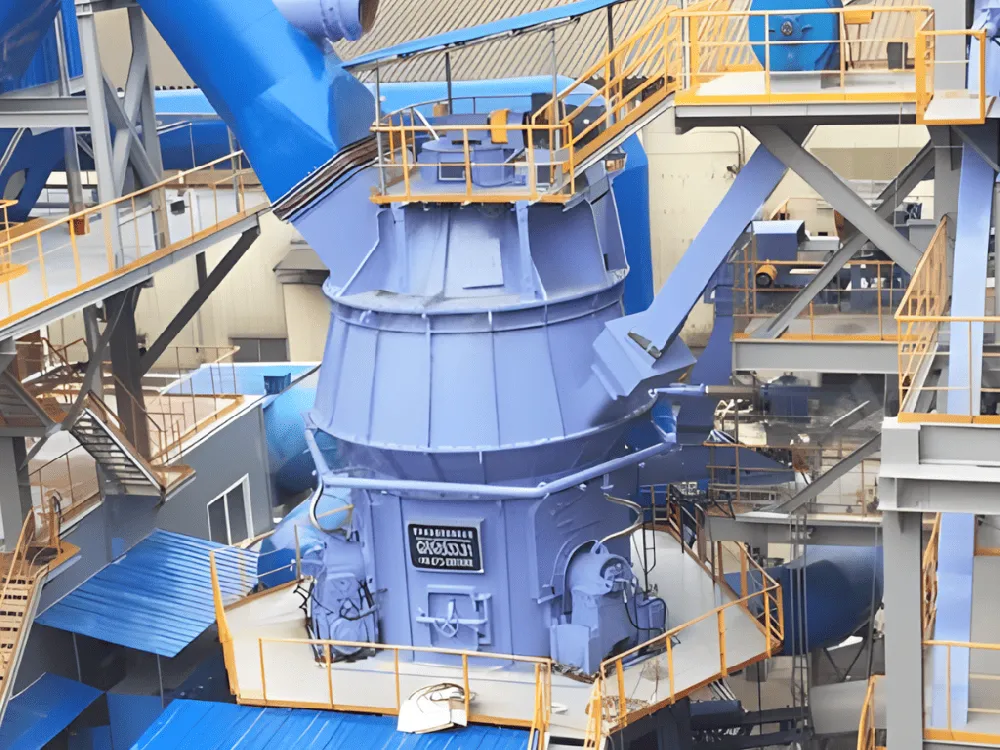
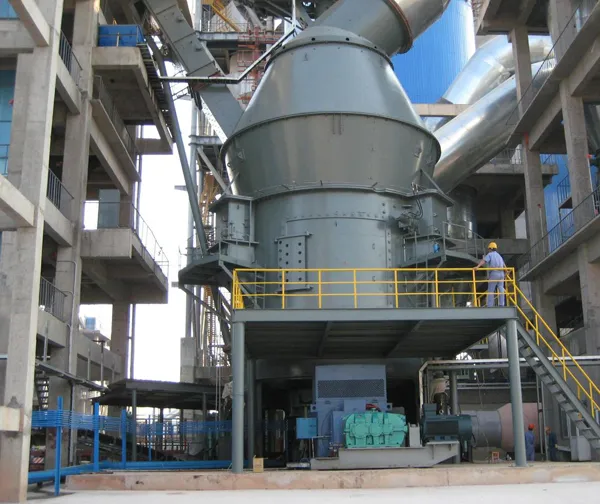
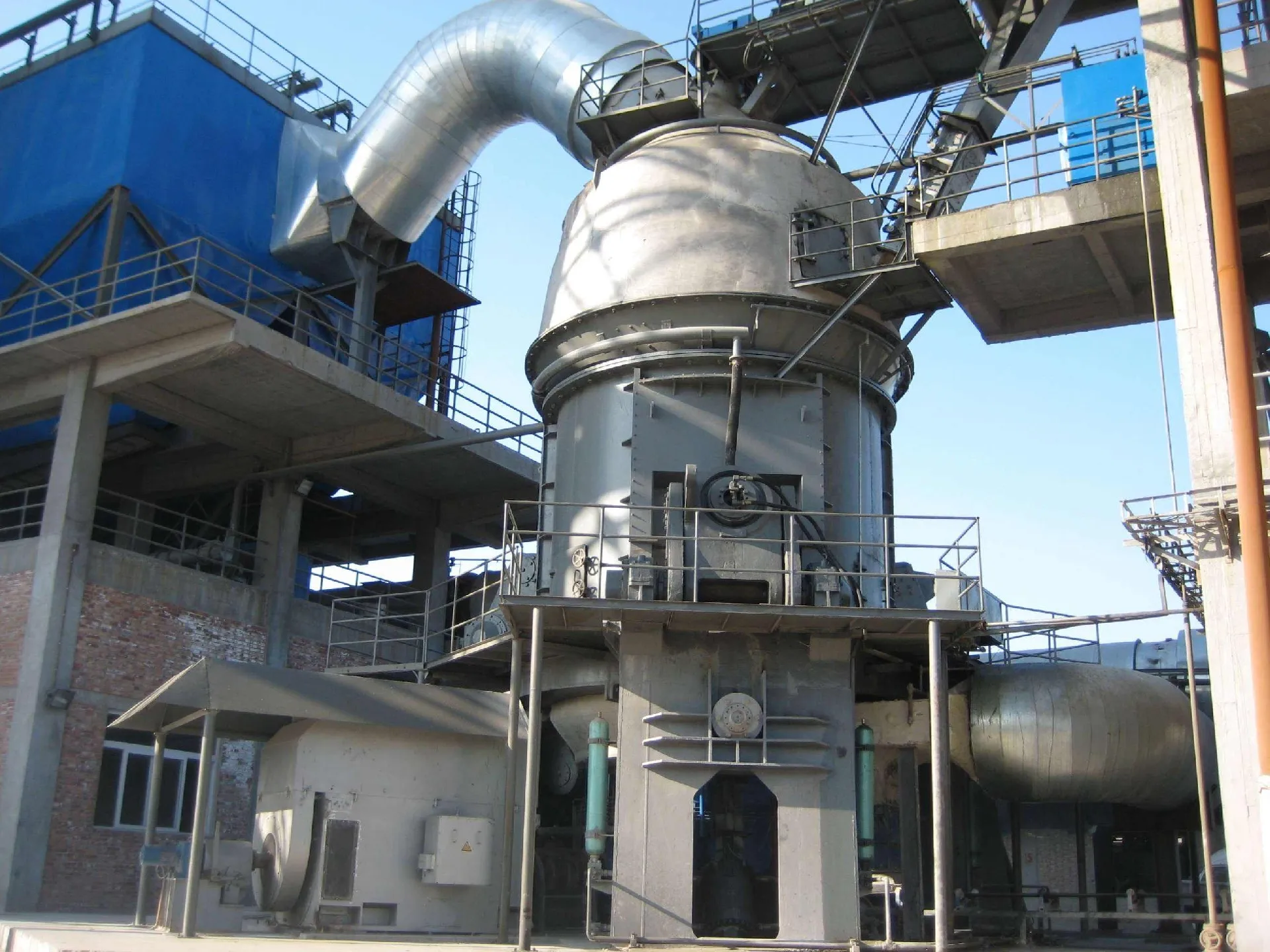
A vertical roller mill (VRM) is a large-scale grinding machine that integrates crushing, drying, grinding, classifying and conveying in one unit. It grinds material by compressing it between a rotating grinding table and two or more hydraulically loaded rollers. VRMs are the standard grinding equipment in modern cement plants and are also widely used for slag (GGBS), coal, raw meal and industrial minerals. Compared with ball mills they use significantly less power, take less space and can handle moist feed thanks to built-in drying.
What Is a Vertical Roller Mill (VRM)?
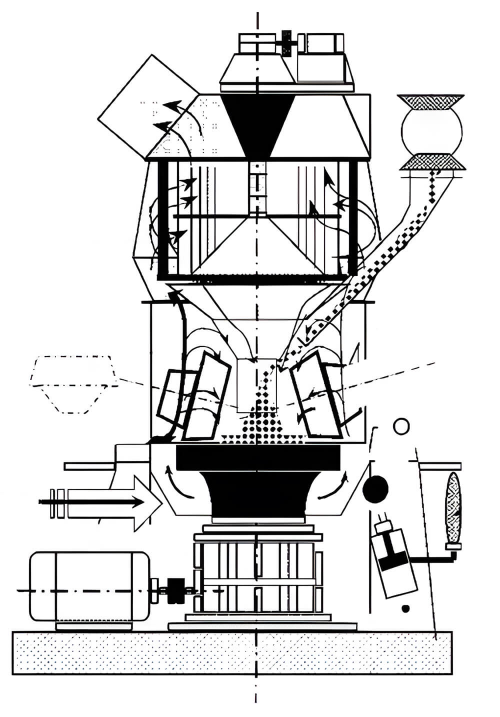
VRM stands for vertical roller mill. Material is fed onto the centre of a rotating grinding table and thrown outward by centrifugal force. As it passes under the rollers it is ground in a material bed. Hot gas entering through the nozzle ring lifts the ground material; the fine fraction passes through a high-efficiency separator at the top and is carried to the bag filter as finished product, while coarse particles fall back to the table for regrinding. Drying, grinding and classifying happen in a single compact machine.
Working Principle
Feeding and grinding — material drops onto the rotating table and is ground by the rollers under hydraulic pressure;
Drying and lifting — hot gas from the nozzle ring dries the material and lifts the particles;
Classifying — the separator returns coarse particles to the table and lets the fines pass;
Collection — finished powder is collected in the bag filter and conveyed to storage.
Structure and Main Components
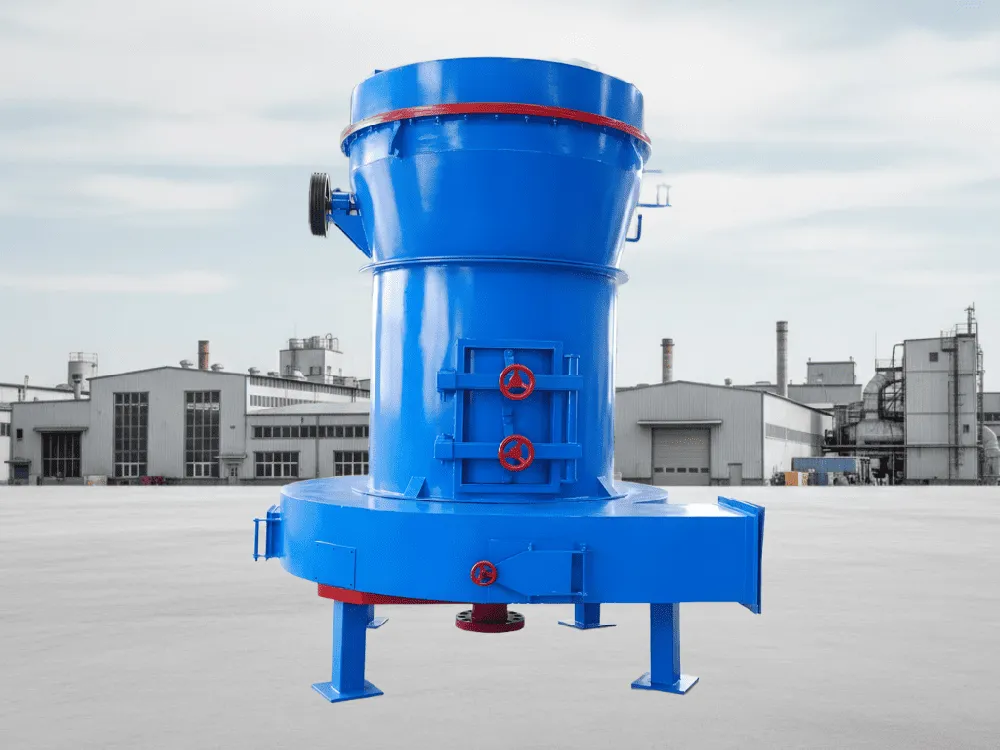
Grinding table (millstone) — rotates and carries the material bed, fitted with wear liners;
Grinding rollers — two to four rollers press the material; roller or tire type can be selected;
Hydraulic tensioning system — applies and adjusts grinding pressure and lifts the rollers for start-up;
High-efficiency separator — controls product fineness;
Nozzle ring — distributes hot gas for drying and transport;
Drive (motor + reducer), rocker arm, housing and hot-gas inlet.
VRM vs Ball Mill: Energy and Operating Comparison
Lower power — roughly 30–40% less grinding power than a ball mill at the same fineness, with the biggest savings on slag and raw meal;
Built-in drying — hot gas dries feed with moisture up to 15–20%, so a separate dryer is often unnecessary;
Compact layout — one machine replaces mill, separator and dryer, taking about 50% less space and cutting civil works;
Quick response — fineness and throughput are easily adjusted and start-up is fast;
Trade-off — roller and table wear is higher on abrasive feed and skilled maintenance is needed; ball mills stay simple and tolerant for some duties.
Applications
Cement raw meal — grinding limestone and additives before the kiln, with integrated drying;
Cement clinker — finish grinding, often blended with slag, fly ash or pozzolana;
Slag / GGBS — grinding granulated blast-furnace slag; see the slag vertical roller mill;
Coal — safe coal powder preparation for kilns and boilers;
Industrial minerals — limestone, calcite, dolomite, barite and talc.
Key Advantages
High grinding efficiency, 30–40% lower power than ball mills;
Integrated crushing, drying, grinding, classifying and conveying;
High automation, stable operation and easy fineness control;
Small footprint, compact layout and low civil cost;
Low noise, negative-pressure, low-dust operation;
Large single-unit capacity for big cement and slag lines.
How to Choose / Sizing
Select the VRM by material, required capacity, fineness and feed moisture. The GRMS range covers grinding-table diameters from 1900 to 7000 mm and capacities from about 15 to 260 t/h:
GRMS19–GRMS30 for 15–40 t/h — coal, minerals and small slag/cement duties;
GRMS33–GRMS46 for 45–95 t/h — typical slag and cement grinding;
GRMS50–GRMS70 for 125–260 t/h — large cement raw meal and clinker lines.
Tell us your material, capacity, fineness (Blaine or mesh), moisture and whether drying and dust collection are required — our engineers will size the mill and design the complete grinding plant.
Related Equipment
Product Specifications
| Specifications | Diameter of Millstone (mm) | Capacity (t/h) | Standard Installed Power (kW) |
|---|---|---|---|
| GRMS19 | 1900 | 15 | 560 |
| GRMS23 | 2300 | 20 | 710 |
| GRMS26 | 2600 | 28 | 1000 |
| GRMS30 | 3000 | 40 | 1400 |
| GRMS33 | 3300 | 45 | 1600 |
| GRMS36 | 3600 | 60 | 2000 |
| GRMS38 | 3800 | 65 | 2240 |
| GRMS40 | 4000 | 75 | 2500 |
| GRMS43 | 4300 | 90 | 3000 |
| GRMS46 | 4600 | 95 | 3150 |
| GRMS50 | 5000 | 125 | 4000 |
| GRMS53 | 5300 | 145 | 4500 |
| GRMS56 | 5600 | 155 | 5000 |
| GRMS60 | 6000 | 180 | 6300 |
| GRMS65 | 6500 | 220 | 7300 |
| GRMS70 | 7000 | 260 | 8500 |
NOTE: Capacity figures are based on general throughput of medium hardness materials. Actual performance may vary depending on feeding size, rock types and water content.
Installation & Service Process
Foundation Drawing
Within 3 days after signing
Professional engineers provide customized foundation drawings based on your site conditions.
Installation & Commissioning
10-15 days
Two experienced engineers provide on-site installation guidance and equipment commissioning.
Operator Training
2-3 days
Comprehensive training covering both theory and hands-on practice for your team.
After-Sales Support
24/7 Technical Support
- Video diagnosis within 2 hours
- Spare parts dispatched within 48 hours
- On-site engineer within 7 days (major countries)
Frequently Asked Questions
How much energy does a VRM save compared with a ball mill?
What does VRM stand for?
How is the fineness adjusted in a vertical mill?
What are the advantages of using a vertical mill compared to traditional mills?
What materials can be processed in a vertical mill?
How does a vertical mill work?
What is a vertical mill and what is it used for?
Related Products
Related Resources
Related Technical Articles
Get a Quotation
Please fill in the form below (* are required) to send us a brief message, we will reply to you within 12 hours/provide you with the latest quotes.
SERVICE PROMISE
Senior technical engineers provide you with customized solutions and professional installation services to effectively solve your problem in after-sales.