
Bucket Wheel Sand Washer - Sand Washing Machine 20-180 TPH
Bucket wheel sand washer for washing & dewatering manufactured and river sand, capacity 20-180 t/h, 5 XS models. Low sand loss, few wear parts, high dewatering; also spiral sand washers. Get a quote!
Product Details
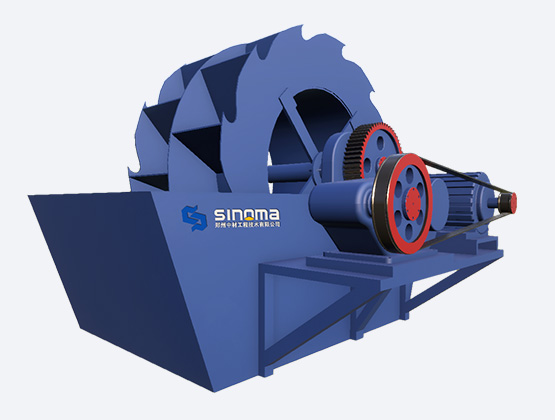
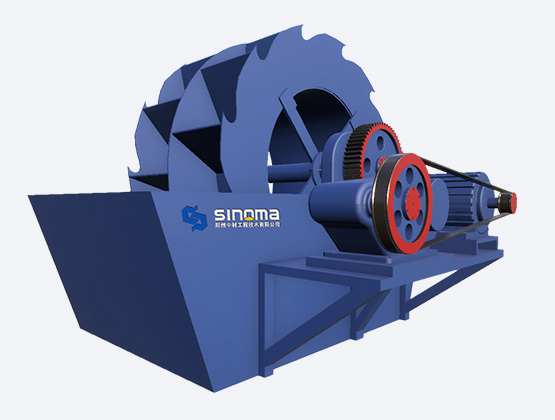
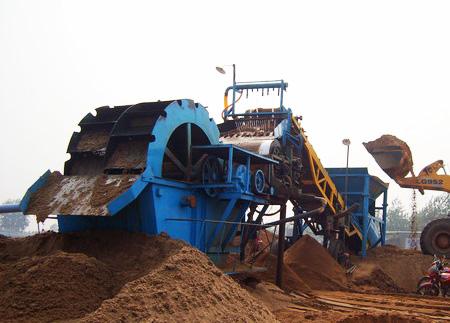
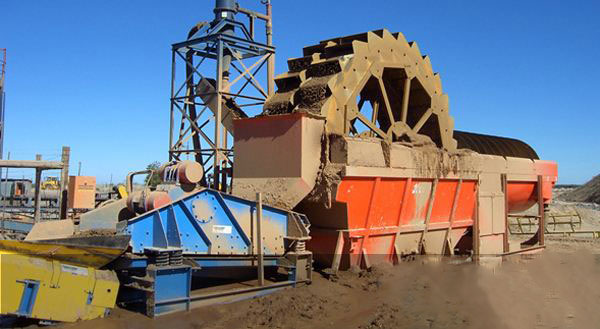
A bucket wheel sand washer (also called a wheel sand washing machine) is water-washing equipment used to remove clay, silt, stone powder and other impurities from manufactured sand, river sand and crushed aggregate. It combines washing, classifying and dewatering in one unit and is widely used in sand making plants, aggregate yards, highway and hydropower projects and concrete production. With low sand loss, high capacity and simple maintenance, it is the most commonly used washer in aggregate and sand making lines.
What Is a Bucket Wheel Sand Washer?
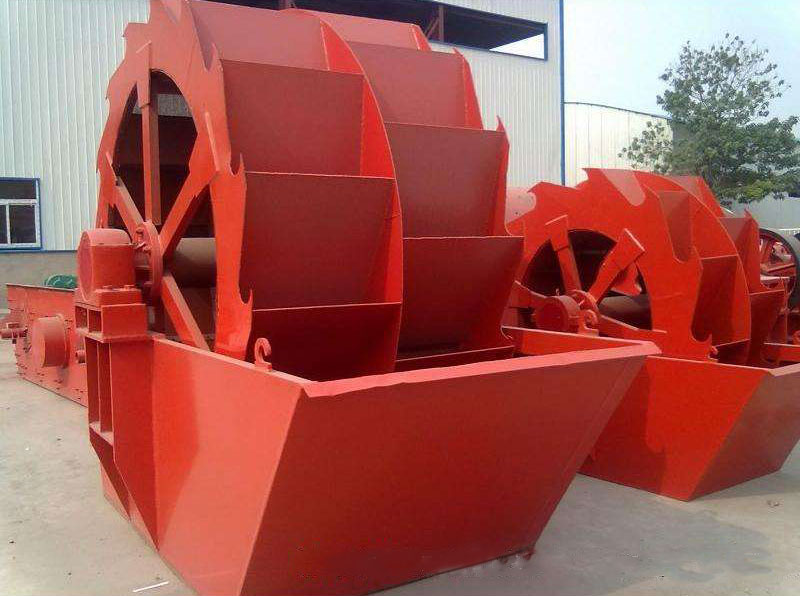
It is a wheel-type washing machine in which a slowly rotating bucket wheel stirs the sand in a water tank, scoops the cleaned material, lifts it out and discharges it after dewatering. Dirty water, clay and fine impurities overflow through the weir, while the loss of usable medium-fine sand is kept to a minimum.
Working Principle
Sand and water are fed into the washing tank, where the rotating buckets stir and tumble the material so that clay, silt and stone powder are washed out and carried away through the overflow outlet. The buckets scoop the cleaned sand from the tank, lift it and discharge it after natural dewatering, producing clean, low-moisture sand. Coarse impurities settle and are removed, and the loss of medium-fine sand is minimized.
Structure and Main Components
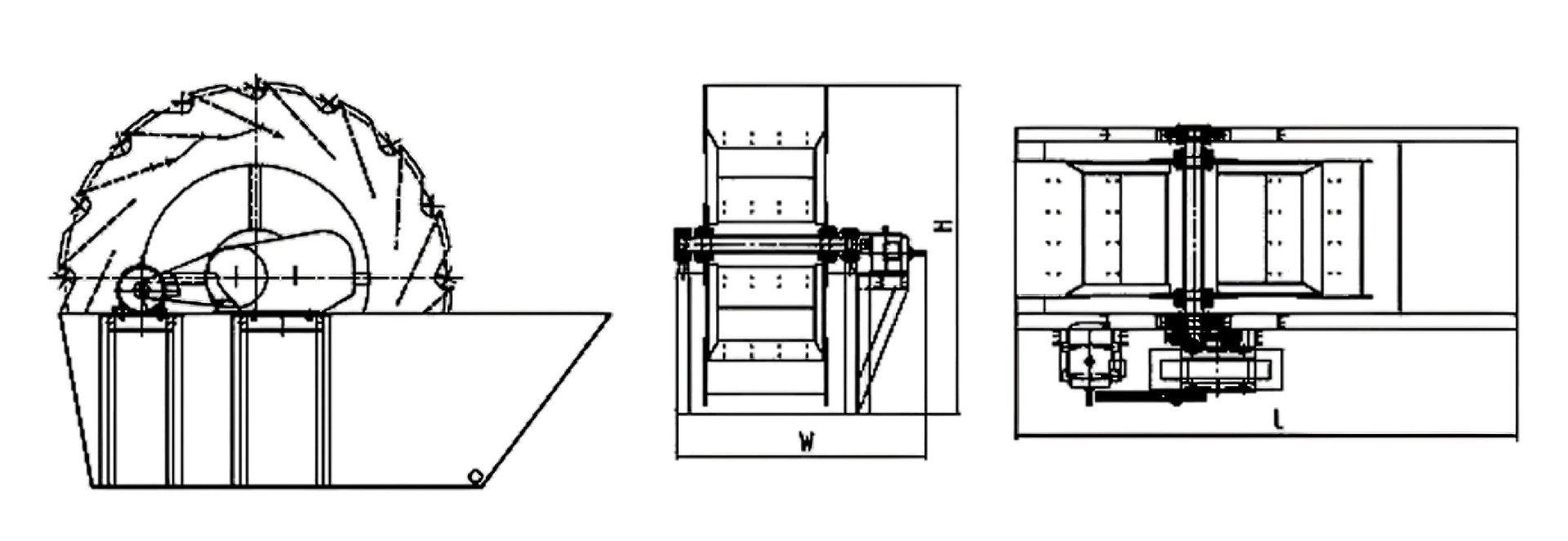
Bucket wheel — fitted with multiple scooping buckets, rotates slowly to lift and dewater the sand;
Washing tank — holds the sand-water mixture, with an overflow weir for dirty water;
Drive unit — motor, reducer and bearings drive the wheel at low speed;
Dewatering / discharge area — drains excess water before the sand leaves;
Frame and water inlet/outlet — support the unit and control the water flow.
Bucket Wheel vs Spiral Sand Washer
Both wash and dewater sand, but they suit different conditions:
Bucket wheel sand washer — very low loss of medium-fine sand, lower water and power use, high capacity and lower cost; best for sand with normal mud content and where fine-sand recovery matters;
Spiral sand washer — stronger scrubbing and classifying action, giving a cleaner result on sticky, high-mud material; the long trough takes more space and slightly more fines may overflow.
For very muddy or sticky feed choose the spiral sand washer; for high throughput with minimum sand loss choose the bucket wheel. The two can also be used together, and a fine sand recycle system recovers the fines from the overflow water.
Features and Key Advantages
Minimum loss of medium-fine sand and stone powder, high recovery;
Simple, robust structure with few wearing parts and low maintenance;
Low water and power consumption, long service life;
High washing and dewatering efficiency for clean, well-graded sand;
Sealed, reliable transmission with smooth, low-noise running.
Applications
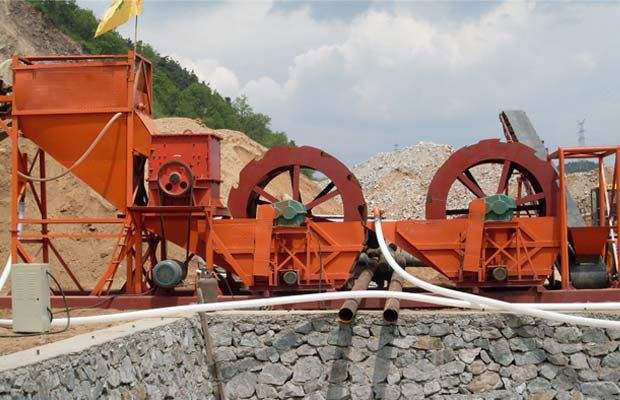
Bucket wheel sand washers are widely used in sand making plants, construction aggregate washing, highway and hydropower projects and mineral beneficiation. They remove clay, silt and powder from manufactured sand to improve concrete quality and grading, and are an essential companion to sand makers such as the vertical shaft impact crusher.
How to Choose the Right Model
Select the model mainly by required capacity and the mud content of the feed:
XS2600 I / II for 20–70 t/h — small and medium plants;
XS2800 for 50–100 t/h;
XS3200 for 80–120 t/h;
XS3600 for 120–180 t/h — large commercial lines.
For high mud content, add a second washing stage or a spiral washer; to recover fines from the wastewater, add a fine sand recycle system. Send us your capacity, feed size and mud content — we will confirm the model and provide a plant layout.
Related Equipment
Product Specifications
| Model | Diameter of bucket wheel(mm) | Capacity(tph) | Power(kW) | Weight(t) |
|---|---|---|---|---|
| XS2600I | 2600 | 20-50 | 5.5 | 2.4 |
| XS2600II | 2600 | 30-70 | 5.5 | 2.9 |
| XS2800 | 2800 | 50-100 | 7.5 | 4 |
| XS3200 | 3200 | 80-120 | 11 | 6.6 |
| XS3600 | 3600 | 120-180 | 15 | 8.8 |
NOTE: Capacity figures are based on general throughput of medium hardness materials. Actual performance may vary depending on feeding size, rock types and water content.
Installation & Service Process
Foundation Drawing
Within 3 days after signing
Professional engineers provide customized foundation drawings based on your site conditions.
Installation & Commissioning
10-15 days
Two experienced engineers provide on-site installation guidance and equipment commissioning.
Operator Training
2-3 days
Comprehensive training covering both theory and hands-on practice for your team.
After-Sales Support
24/7 Technical Support
- Video diagnosis within 2 hours
- Spare parts dispatched within 48 hours
- On-site engineer within 7 days (major countries)
Frequently Asked Questions
What is the power and weight of the bucket wheel sand washer?
Where is the bucket wheel sand washer used?
How does a bucket wheel sand washer reduce sand loss?
What is the capacity of the bucket wheel sand washer?
What is the difference between bucket wheel and spiral sand washer?
What is a bucket wheel sand washer?
Related Products


Get a Quotation
Please fill in the form below (* are required) to send us a brief message, we will reply to you within 12 hours/provide you with the latest quotes.
SERVICE PROMISE
Senior technical engineers provide you with customized solutions and professional installation services to effectively solve your problem in after-sales.