
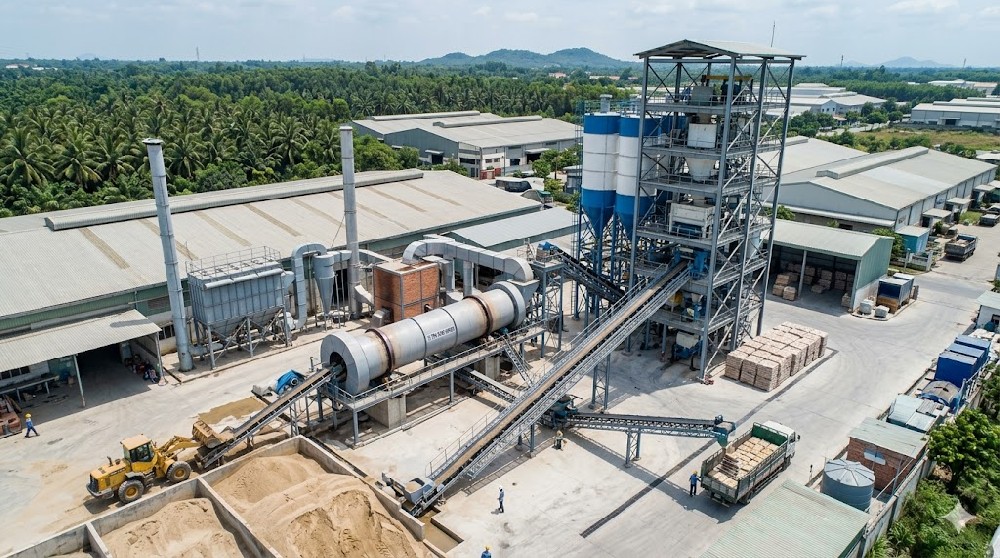
15 TPH River Sand Drying Line for Dry Mix Mortar Production in Vietnam
15 TPH River Sand Drying Line for Dry Mix Mortar Production in VietnamEliminating Weather Dependency: Stable Sand Supply, Year-Round1. Project BackgroundA dry mix mortar manufacturer in northern Vietnam had been in operation for several years, producing tile adhesives, masonry mortars, and wall putt
Solution Overview
15 TPH River Sand Drying Line for Dry Mix Mortar Production in Vietnam
Eliminating Weather Dependency: Stable Sand Supply, Year-Round
1. Project Background
A dry mix mortar manufacturer in northern Vietnam had been in operation for several years, producing tile adhesives, masonry mortars, and wall putty for the local construction market. Their products sold steadily, but there was one recurring problem they couldn't solve: sand moisture.
Northern Vietnam experiences a pronounced rainy season that typically runs from May through October. During these months, the river sand supplied by local vendors — even sand that had been stockpiled and allegedly "dried" — would arrive with moisture content ranging from 8% to 12%.
This created a cascade of operational headaches:
Wet sand clogged screens and disrupted batching accuracy, since weigh hoppers were calibrated for dry material.
Mixing times stretched longer as residual moisture interfered with additive dispersion.
Finished mortar quality became inconsistent — customers noticed, and complaints ticked up during the wet months.
The plant occasionally had to halt production entirely when sand was too damp to process.
The management team explored sourcing pre-dried sand from third parties, but transport costs from the nearest drying facility were prohibitive, and supply reliability during peak rainy season was no better.
The conclusion was straightforward: if they wanted stable production year-round, they needed their own drying capacity.
2. Why a Three-Pass Rotary Dryer
The customer evaluated several drying technologies before making a decision.
A single-pass rotary drum was the cheapest option, but it demanded more floor space and higher fuel consumption to achieve the target final moisture. A fluidized bed dryer offered good thermal efficiency but required more maintenance and was less forgiving with variable feed moisture.
The three-pass rotary dryer was selected for four reasons:
Compact footprint. The three-pass design routes material through concentric drums, effectively tripling the drying path length without increasing overall machine length. This mattered — the available installation area was approximately 700 m², bounded by existing plant structures.
Lower fuel consumption per ton. By recovering residual heat across multiple passes, the dryer used less fuel than a comparable single-pass unit. In Vietnam, where fuel costs had been climbing, this was a meaningful operating advantage.
Handles moisture fluctuations. The design accommodates varying inlet moisture without major adjustments. This was important because sand moisture would swing from 4–5% in dry months to 12% in wet months.
Proven in similar applications. Several plants in Southeast Asia had been running three-pass dryers for river sand with good results, giving the customer confidence in the technology.
3. Material Parameters & Performance Requirements
The drying system was specified around clear, measurable targets:
| Parameter | Specification |
|---|---|
| Material | River sand |
| Feed Size | 0–5 mm |
| Initial Moisture (Dry Season) | 4–6% |
| Initial Moisture (Rainy Season) | 8–12% |
| Final Moisture (Target) | ≤ 0.5% |
| Rated Throughput | 15 tons per hour |
The 0.5% final moisture target was not arbitrary. For dry mix mortar production — particularly tile adhesives containing cellulose ethers and other moisture-sensitive additives — residual moisture above 0.5% can trigger premature hydration of cementitious components and reduce shelf life. The customer's quality team had traced several batch failures back to sand moisture, which made this specification a hard requirement.
4. Equipment Configuration
The line was designed as a complete sand pre-treatment system, from raw feed to dry storage:
| Equipment | Qty | Function |
|---|---|---|
| Hopper Feeder | 1 | Receives raw sand from loader, regulates feed rate |
| Belt Conveyor | 2 | Transfers sand between process stages |
| Three-Pass Rotary Dryer | 1 | Core drying unit, three concentric cylinders |
| Hot Air Furnace | 1 | Generates drying heat, compatible with coal or biomass fuel |
| Cyclone Dust Collector | 1 | Primary dust separation, captures coarse particles |
| Pulse Dust Collector | 1 | Secondary filtration, fine dust removal before exhaust |
| Finished Sand Storage Bin | 1 | Holds dried sand before transfer to mortar batching silos |
The dust collection setup — cyclone followed by pulse-jet baghouse — was specified to meet local environmental regulations. Fine sand dust from the drying process can be significant, especially when processing material with high fines content. The two-stage system ensured that stack emissions stayed within permitted limits and that recoverable fines could be reintroduced into the product stream rather than lost.
5. Production Capacity
| Parameter | Value |
|---|---|
| Rated Capacity | 15 TPH |
| Operating Hours | 10 hours/day |
| Daily Output | ~150 tons |
| Annual Output | ~45,000 tons |
Operating at 10 hours per day gave the plant enough dried sand to supply its mortar production lines with buffer capacity. The 45,000-ton annual figure was calculated based on 300 operating days, leaving room for scheduled maintenance and seasonal demand fluctuations.
6. Production Flow
Raw Sand Delivery → Hopper Feeder → Belt Conveyor → Three-Pass Rotary Dryer
                                                            ↓
                                              Hot Air Furnace (heat source)
                                                            ↓
                                                  Cyclone Dust Collector
                                                            ↓
                                                  Pulse Dust Collector → Exhaust
                                                            ↓
                                                  Finished Sand Storage Bin
                                                            ↓
                                                  To Mortar Batching System
Wet sand was loaded into the hopper by a front-end loader. From there, a variable-speed belt conveyor fed the dryer at a controlled rate, matched to the moisture level of the incoming material. The operator could adjust feed speed based on visual inspection and periodic moisture readings — slower for wet-season sand, faster for dry-season material.
Inside the three-pass drum, sand moved through the inner cylinder first, then reversed direction through the middle cylinder, and finally passed through the outer cylinder before discharge. This triple-pass path extended residence time without requiring a longer machine. Hot air from the furnace flowed counter-current to the sand in the inner cylinder and co-current in the outer passes, optimizing heat transfer.
After drying, the sand passed through two-stage dust collection. The cyclone captured heavier particles, while the pulse-jet baghouse handled fine dust. Cleaned exhaust was discharged through a stack. Dried sand dropped into the storage bin, ready to be pneumatically conveyed or mechanically transferred to the mortar plant's batching silos.
7. Operational Results
Within the first full rainy season after commissioning, the difference was clear:
| Metric | Before Installation | After Installation |
|---|---|---|
| Sand Moisture (Rainy Season) | 8–12% | ≤ 0.5% |
| Production Stoppages (Wet Months) | 5–8 per season | 0 |
| Mortar Batch Rejections | 2–3% of batches | < 0.2% |
| Drying Cost per Ton | N/A (sourced dry sand) | Reduced vs. purchased dry sand |
| Sand Storage Losses | Clumping and waste in stockpile | Minimal |
Three outcomes were particularly significant:
Mortar quality stabilized across seasons. The quality team no longer saw the seasonal spike in customer complaints that had become an annual pattern. Tile adhesive open time and bond strength tests showed consistent results regardless of whether production was in July or December.
Sand storage losses dropped sharply. Previously, wet sand in the yard would form clumps, develop mold in humid conditions, and generate significant waste. Dry sand stored in the sealed finished bin eliminated these losses.
Production efficiency improved by roughly 25%. This figure came from the plant manager's operational logs: shorter mixing cycles, fewer screen blockages, and virtually no unplanned downtime related to sand quality. What used to be a bottleneck became a non-issue.
8. Customer Feedback
During a site visit six months after commissioning, the plant manager summed it up:
"The dryer system solved our biggest challenge during the rainy season. Before, we would check the weather forecast and worry about sand deliveries. Now we don't think about it. We maintain stable sand moisture levels throughout the year, and our production schedule no longer depends on whether it rained the day before."
He noted one practical detail: the three-pass dryer's compact layout meant they didn't need to expand the plant footprint. The entire system, including the furnace and dust collection, fit within the available 700 m² alongside their existing mortar production building.
9. Key Takeaway
This project addressed a specific, measurable operational problem — seasonal sand moisture — with a proven technology sized to actual throughput requirements.
The investment logic was not speculative. The customer could calculate the cost of production stoppages, batch rejections, and quality complaints from their own records. The dryer paid for itself by eliminating these losses and by reducing the per-ton cost of dried sand compared to third-party sourcing.
For dry mix mortar producers in tropical climates, where sand moisture varies dramatically between seasons, an in-house drying line is often not a luxury — it's a prerequisite for consistent product quality and reliable production planning. This case demonstrates how a correctly specified dryer can turn a seasonal operational liability into a stable, year-round manufacturing advantage.
Related Equipment
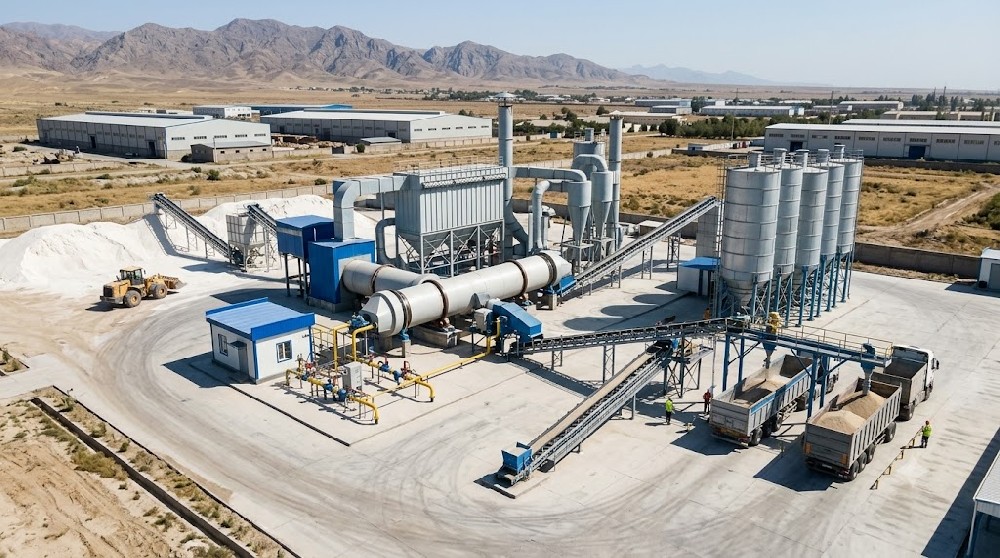
10 TPH Quartz Sand Drying Plant for Construction Materials Company in Uzbekistan
View Details
15 TPH River Sand Drying Line for Dry Mix Mortar Production in Vietnam
View Details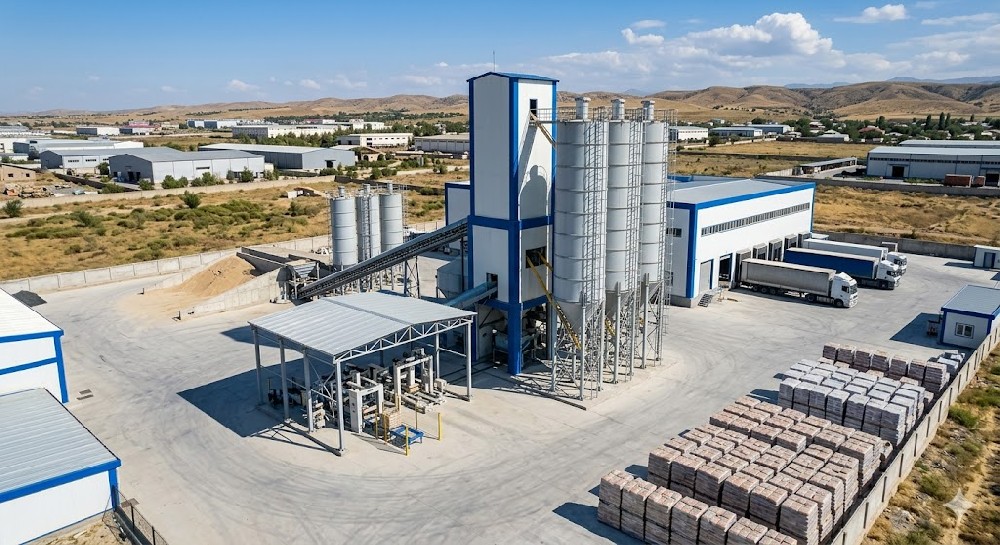
15 TPH Dry Mortar Production Plant for Building Materials Manufacturer in Uzbekistan
View Details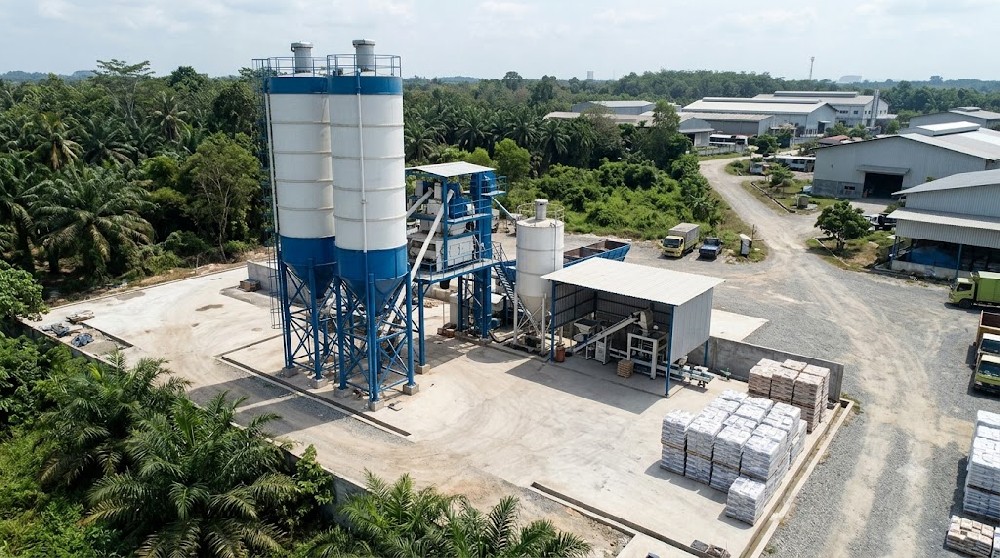
8 TPH Tile Adhesive & Wall Putty Production Line in Indonesia
View DetailsMake an Inquiry
Get a Quotation
Please fill in the form below (* are required) to send us a brief message, we will reply to you within 12 hours/provide you with the latest quotes.
SERVICE PROMISE
Senior technical engineers provide you with customized solutions and professional installation services to effectively solve your problem in after-sales.