

Must-Read for Concrete Mixer Truck Drivers: Safe Operation and Rollover Prevention Guide
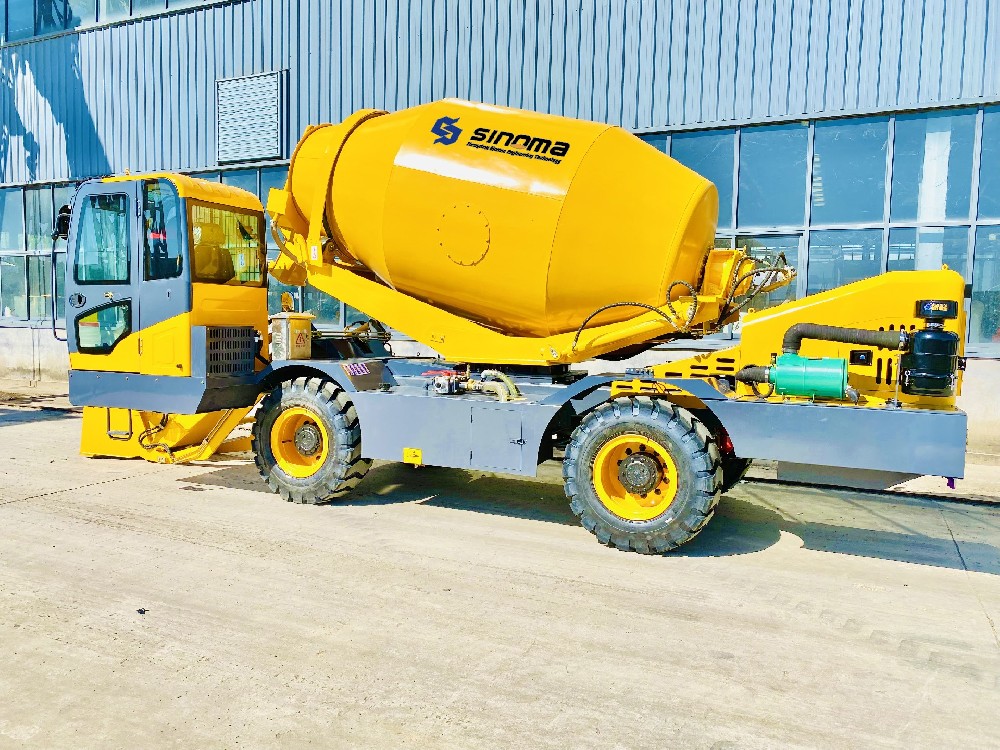 Must-Read for Concrete Mixer Truck Drivers: Safe Operation and Rollover Prevention Guide
Concrete mixer truck drivers shoulder immense responsibility, transporting heavy loads through complex environments where a single misstep can lead to catastrophic rollover incidents. The unique combination of a high center of gravity and shifting liquid concrete creates a vehicle that demands constant vigilance and specialized driving techniques. Annually, rollovers account for over 30% of serious incidents involving mixer trucks, often resulting from misjudged turns, improper speed on slopes, or navigating unprepared terrain. This guide provides a comprehensive, actionable framework for mitigating these risks, ensuring not only your safety but also the safety of everyone on the road.
I. Understanding the Physics of a Loaded Mixer
A fully loaded concrete mixer truck is a study in dynamic physics. With a drum carrying up to 10 cubic yards of concrete, the vehicle's center of gravity is exceptionally high. Unlike a solid load, the liquid concrete inside the drum is constantly in motion, sloshing and shifting. This fluid dynamics effect can create powerful lateral forces, especially during maneuvers like turning or sudden lane changes. When a truck enters a turn, the liquid continues moving in its original direction, pushing against the turn and effectively increasing the force trying to tip the truck over. Understanding that you are not driving a rigid load but a massive, moving pendulum is the first step toward safe operation.
II. Mastering Turns and Curves
Turning is the most common scenario for a rollover. The key is to manage the centrifugal force acting on the high center of gravity.
Reduce Speed Before the Turn: Slow down significantly *before* you enter the curve, not during it. A safe speed for a 90-degree turn in a residential area might be as low as 5-10 mph, depending on the sharpness.
Maintain a Smooth, Wide Arc: Avoid sharp steering inputs. Take turns as wide as safely possible to decrease the angle of the turn and the resulting lateral force.
Control the Drum Rotation: Ensure the drum is rotating at the correct speed for transport (mixing speed, not charging or discharging speed) as specified by the manufacturer. A steady rotation helps stabilize the load.
Case Study: A 2021 incident in Texas involved a driver taking a freeway off-ramp at 25 mph. The concrete's surge, combined with the turn's force, caused a rollover. Investigation concluded that reducing speed to 15 mph would have likely prevented the accident.
III. Navigating Inclines and Declines
Hills present unique challenges, shifting the vehicle's weight distribution dramatically.
Ascending: Maintain steady power and momentum. Avoid sudden acceleration, which can cause wheel spin and loss of traction, especially on wet or loose surfaces.
Descending: This is the greater risk. Use a low gear (engine braking) to control your speed. Relying solely on service brakes can lead to brake fade from overheating. A common guideline is to descend a hill in the same gear you would use to climb it.
Never Coast in Neutral: This eliminates engine braking and gives you significantly less control over the vehicle's speed and stability.
IV. Operating in Complex Jobsite Conditions
Construction sites are often the most hazardous locations, featuring soft ground, uneven surfaces, and obstacles.
Pre-Trip the Site: Before entering, if possible, walk the intended path. Look for soft spots, trenches, steep drop-offs, and overhead hazards.
Maintain a Safe Distance from Excavations: The ground near trenches or recent backfill can be unstable and collapse under the extreme weight of a mixer truck. Maintain a minimum distance of twice the depth of the excavation.
Use Spotters: Always use a trained spotter when backing up or maneuvering in tight spaces. Agree on clear hand signals before starting the maneuver.
Stabilize on Unlevel Ground: If you must position the truck on a slope for pouring, ensure the parking brake is fully engaged and use wheel chocks. Be hyper-aware of any settling or shifting of the ground beneath the tires.
V. Essential Pre-Operation Checklist
A disciplined pre-trip inspection is your first line of defense.
Walk-Around Inspection: Check for tire pressure and wear, fluid leaks (hydraulic, engine oil, coolant), and any visible damage to the drum or chassis.
Brake Test: Perform a test of both service and parking brakes on a level, safe surface before heading to the jobsite.
Drum and Chute Check: Ensure the drum rotation controls are functioning correctly and the chute is securely stowed for travel.
Load Verification: Confirm the concrete load is within the legal and manufacturer's rated capacity. An overloaded truck is exponentially more dangerous.
Mastering the safe operation of a concrete mixer truck transcends basic driving skills; it requires a deep respect for the vehicle's physics and a proactive commitment to risk management. By internalizing the principles outlined in this guide—slowing down for turns, using engine braking on hills, meticulously navigating jobsites, and performing thorough pre-trip inspections—you transform from a simple driver into a safety professional. Your vigilance protects your life, your livelihood, and the community you serve. Make every journey a safe one.