

Concrete Batching Plant Performance Optimization: Maximize Production Capacity
Concrete Batching Plant Performance Optimization: A Practical Guide to Maximizing Production Capacity
For ready-mix concrete producers and precast manufacturers, the concrete batching plant is the heart of the operation. Yet many plants operate well below their true potential — not because the equipment is inadequate, but because of hidden bottlenecks in the production cycle, material flow, and control system. At Zhengzhou Sinoma, we have commissioned and optimized hundreds of concrete batching plants worldwide, and we consistently see that a well-optimized plant can deliver 15–30% more practical production capacity without any major equipment replacement.
This guide draws on our field experience to walk you through the key areas of concrete batching plant performance optimization — from initial commissioning to ongoing cycle-time reduction, material flow improvement, and control system upgrades.
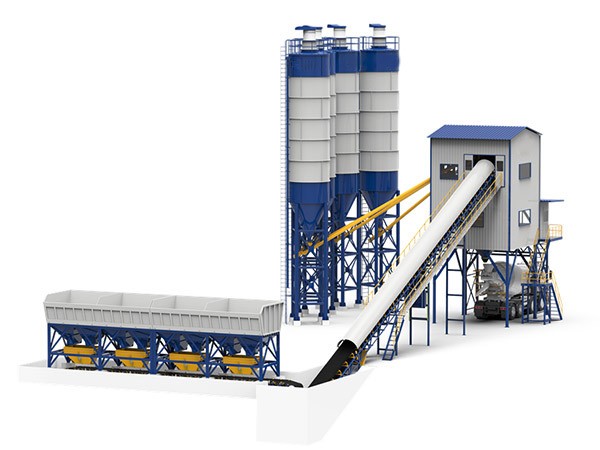
Installed Is Not the Same as Production-Ready
One of the most common mistakes we see is treating mechanical installation as the finish line. A plant can be fully assembled, powered on, and even producing its first batches — yet still be far from production-ready. The gap between "installed" and "optimized" is where most lost production capacity hides.
A truly production-ready concrete batching plant requires:
Complete system checkout and I/O verification for all sensors, valves, and motors
Calibration of all weighing scales (aggregates, cement, water, admixtures) with documented accuracy
Validation of gate operation, discharge sequences, and interlock logic
Dry-cycle testing of the full automatic sequence without material
Initial batch production with gradation and slump verification
First-truck production under real operating conditions
Operator training and production ramp-up to target capacity
Skipping any of these steps means the plant will carry hidden inefficiencies into daily operation. At Zhengzhou Sinoma, our concrete batching plants are delivered with a comprehensive commissioning checklist to ensure every plant reaches its rated capacity from day one.
Understanding the Production Cycle: Where Seconds Disappear
In a concrete batching plant, every production cycle consists of several sequential and overlapping stages. The key to optimization is understanding exactly where time is being lost in each cycle. A typical cycle includes:
Aggregate batching — Weighing coarse and fine aggregates in the hopper
Cement and powder batching — Weighing cement, fly ash, slag powder
Water and admixture batching — Weighing water and chemical admixtures
Aggregate discharge to mixer — Opening the aggregate hopper gate
Mixing — The actual mixing time in the concrete mixer
Concrete discharge — Opening the mixer discharge gate to the truck
Truck positioning and fill time — The truck moving under the discharge and filling
While the rated capacity of a batching plant is based on theoretical cycle times, real-world cycles are often 20–50% longer due to:
Slow aggregate feeding due to improper belt speed or wet material
Delayed gate opening due to pneumatic system pressure drops
Excessive mixing time beyond what the mix design actually requires
Slow truck positioning or communication delays between plant and truck
Manual interventions when automatic sequences pause unexpectedly
Cleanout cycles that run longer than necessary
Key principle: Thirty seconds saved per cycle on a plant running 200 cycles per day equals 100 minutes of recovered production time — enough for an additional 8–12 truckloads of concrete.
Material Flow Optimization: The Hidden Bottleneck
Many plant performance issues originate not in the mixer, but upstream in the material handling system. Poor material flow causes cascading delays throughout the production cycle.
Aggregate Storage and Feeding
The aggregate batching system is typically the longest stage in the cycle. Common issues include:
Wet or sticky aggregates that bridge in hoppers and cause feeding delays
Under-sized conveyor belts that cannot feed the weigh hopper fast enough
Poor hopper geometry that causes material hang-ups
Lack of vibrators on hopper walls for sticky materials
Solutions include installing hopper vibrators, optimizing belt speed, ensuring proper hopper discharge geometry, and managing aggregate moisture content through covered storage.
Cement and Powder Handling
Powder batching systems often suffer from:
Slow screw conveyor feeding due to under-sizing
Caking or bridging in cement silos due to moisture
Inaccurate weighing due to aeration of powder during feeding
Air filter clogging that causes pressure buildup in silos
Regular silo aeration, properly sized screw conveyors, and routine filter maintenance can significantly reduce powder batching time.
Water and Admixture Dosing
Water and admixture systems are often overlooked but can contribute to cycle delays:
Slow water filling due to low supply pressure or small pipe diameter
Admixture dosing pumps that are too slow for high-dose admixtures
Leaking valves that cause inaccurate dosing and require re-weighing
Upgrading water supply piping, installing high-flow admixture pumps, and regular valve maintenance can shave valuable seconds off every cycle.
Batch Control System Upgrade: The Brain of the Plant
The batch control system is the brain of any concrete batching plant. An outdated or poorly configured control system is one of the most common causes of underperformance. At Zhengzhou Sinoma, we equip our plants with advanced PLC-based batch control systems that enable precise automation and real-time monitoring.
Signs Your Control System Needs an Upgrade
Frequent manual interventions during automatic production
Slow recipe loading or batch start times
Lack of real-time production data and reporting
No remote diagnostics or alarm notifications
Inability to integrate with ERP or dispatch systems
Obsolete hardware that is difficult to source spare parts for
What a Modern Control System Delivers
Parallel batching — Aggregate, cement, and water batching can overlap, reducing total cycle time
Adaptive discharge timing — The system learns optimal gate timing based on material characteristics
Automatic moisture compensation — Real-time aggregate moisture adjustment for consistent slump
Production data logging — Every batch is recorded with full parameters for quality control and analysis
Remote monitoring — Plant managers can monitor production from anywhere via web or mobile
Alarm and fault diagnostics — Instant notification of issues with suggested corrective actions
A control system upgrade is often one of the highest-ROI improvements a plant can make, typically delivering 10–20% capacity improvement at a fraction of the cost of new equipment.
Reducing Operator Dependence: Standardization and Training
Even the best equipment and control system will underperform if operators rely on manual workarounds. High-performing plants minimize operator dependence through standardization and training.
Standard Operating Procedures (SOPs)
Documented SOPs ensure that every operator runs the plant the same way — the optimal way. Key SOPs include:
Startup and shutdown procedures
Recipe management and batch entry
Truck dispatch and communication protocols
Cleanout and maintenance routines
Emergency stop and fault recovery procedures
Operator Training
Well-trained operators understand not just how to run the plant, but why each parameter matters. At Zhengzhou Sinoma, we provide comprehensive operator training as part of every concrete mixing plant commissioning, covering:
Control system operation and recipe management
Concrete mix design fundamentals and slump control
Routine maintenance and lubrication schedules
Fault diagnosis and basic troubleshooting
Safety procedures and lockout/tagout
Reducing Manual Interventions
Every manual intervention during automatic production adds time and introduces variability. Track and analyze the causes of manual interventions, then eliminate them through:
Control system parameter tuning
Sensor calibration and replacement
Mechanical adjustments (gate timing, belt speed)
Recipe optimization to reduce batch adjustments
Preventive Maintenance: Keeping the Plant at Peak Performance
A concrete batching plant is a complex mechanical system with hundreds of moving parts. Without a disciplined preventive maintenance program, performance will gradually degrade as components wear.
Critical Maintenance Areas
| Component | Maintenance Frequency | Impact if Neglected |
|---|---|---|
| Mixer liners and blades | Inspect monthly, replace as needed | Poor mixing quality, longer mix times |
| Aggregate conveyor belts | Inspect weekly, lubricate monthly | Belt slippage, slow feeding, belt damage |
| Weighing system load cells | Calibrate quarterly | Inaccurate batching, wasted materials |
| Pneumatic system (valves, cylinders) | Inspect weekly, drain moisture daily | Slow gate operation, sequence delays |
| Cement screw conveyors | Lubricate monthly, inspect wear | Slow cement feeding, bridging |
| Air compressor and filters | Service per manufacturer schedule | Low air pressure, slow actuator operation |
| Water and admixture pumps | Inspect monthly, calibrate quarterly | Slow dosing, inaccurate water content |
A well-maintained plant not only performs better but also has fewer unplanned stoppages. We recommend maintaining a detailed maintenance log and scheduling preventive maintenance during low-production periods to minimize impact on output.
Performance Measurement: You Can't Improve What You Don't Measure
Effective plant optimization requires a systematic approach to measurement. Before making any changes, establish a baseline of current performance. Then, after implementing improvements, measure again to quantify the results.
Key Performance Indicators (KPIs) to Track
Actual production per hour — Compare against rated capacity
Average cycle time — From batch start to truck discharge complete
Batch accuracy — Deviation of each material from target weight
Slump consistency — Variation in concrete slump across batches
Manual intervention rate — Number of manual actions per 100 batches
Equipment availability — Percentage of scheduled time the plant is operational
Material waste — Percentage of material wasted due to inaccurate batching or rejected loads
The Optimization Cycle
Follow this continuous improvement cycle:
Measure — Establish baseline KPIs over a representative period (1–2 weeks)
Analyze — Identify the largest sources of lost time and inefficiency
Improve — Implement targeted changes (one at a time, so results are attributable)
Verify — Measure again after the change to confirm improvement
Document — Record what changed, why, and the measured result
Repeat — Move to the next largest opportunity
This systematic approach ensures that optimization efforts deliver measurable, sustainable results rather than random tweaks that may or may not help.
When to Consider Equipment Upgrade or Replacement
While optimization can recover significant capacity, there comes a point where equipment limitations become the binding constraint. Signs that equipment upgrade may be warranted include:
Mixer capacity is consistently the bottleneck even after cycle optimization
Aggregate batching system cannot keep up with mixer demand
Control system hardware is obsolete and no longer supported
Major structural components show significant wear or fatigue
Maintenance costs exceed 15–20% of equipment value annually
Plant capacity cannot meet growing market demand even at full optimization
In such cases, Zhengzhou Sinoma can provide a detailed plant audit and recommendation for targeted upgrades — whether that means a larger mixer, faster batching system, control system modernization, or a complete plant replacement. Our modern concrete batching plants feature high-efficiency twin-shaft mixers, fast batching systems, and advanced automation that can double the capacity of older plants.
Frequently Asked Questions
Q: How much production capacity can typically be recovered through optimization?
A: In our experience, most plants can recover 15–30% of practical capacity through optimization alone — without major equipment replacement. The actual amount depends on how well the plant was initially commissioned and maintained. Plants that were never properly commissioned can see even larger gains.
Q: How long does a typical optimization project take?
A: A basic optimization assessment and implementation can be completed in 1–2 weeks, including baseline measurement, identification of key bottlenecks, and implementation of targeted improvements. More extensive projects involving control system upgrades or mechanical modifications may take 2–4 weeks.
Q: Can optimization be done without stopping production?
A: Most optimization work can be done during normal operation or during scheduled maintenance windows. Measurement and analysis are entirely non-intrusive. Some mechanical adjustments may require brief stoppages, but these can be scheduled during low-demand periods.
Q: What is the typical ROI for a concrete batching plant optimization project?
A: Optimization projects typically pay for themselves within 3–6 months through increased production volume, reduced material waste, and lower maintenance costs. For a plant producing 500 m³/day, even a 10% capacity increase equals 50 additional m³ per day — significant additional revenue at minimal cost.
Q: Does Zhengzhou Sinoma provide optimization services for plants not manufactured by your company?
A: Yes. We provide performance assessment and optimization services for concrete batching plants of all makes and models. Our engineers have experience with virtually every major plant manufacturer and can identify improvement opportunities regardless of the original equipment supplier.
Get Your Plant Assessed by Experts
If your concrete batching plant is not meeting its production targets, or if you suspect there is hidden capacity waiting to be unlocked, contact Zhengzhou Sinoma for a professional plant performance assessment. Our experienced engineers will conduct a comprehensive on-site evaluation, identify the key bottlenecks, and provide a detailed optimization plan with measurable targets.
What you get with our plant assessment:
Comprehensive on-site inspection of all plant systems
Baseline performance measurement and KPI analysis
Identification of bottlenecks and improvement opportunities
Detailed optimization plan with prioritized actions
Estimated capacity improvement and ROI for each recommendation
Implementation support and post-optimization verification
Contact us today to schedule your concrete batching plant performance assessment. With over 30 years of experience in concrete equipment manufacturing and plant optimization, Zhengzhou Sinoma has the expertise to help you get the most from your plant.
Don't leave production capacity on the table — measure it, find the constraint, improve it, and prove the results.
About Zhengzhou Sinoma
Zhengzhou Sinoma Engineering Technology Co., Ltd. is a leading manufacturer of concrete batching plants, concrete mixers, crushing equipment, and grinding mills based in Zhengzhou, China. With over 30 years of industry experience and a team of 380 professionals including 120+ specialized engineers, we serve customers in more than 100 countries. Our product range includes stationary and mobile concrete batching plants, twin-shaft and planetary mixers, aggregate batching systems, and complete turnkey solutions for the concrete and construction industries. Learn more about Zhengzhou Sinoma →